Overview
In this study, we will assess acne severity by taking photos of the patient's face using the Legit.Health mobile application.
More specifically, we will take 2 photos of the face (left diagonal and right diagonal) for all patients at baseline and at additional subsequent visits as specified in the Study Protocols.
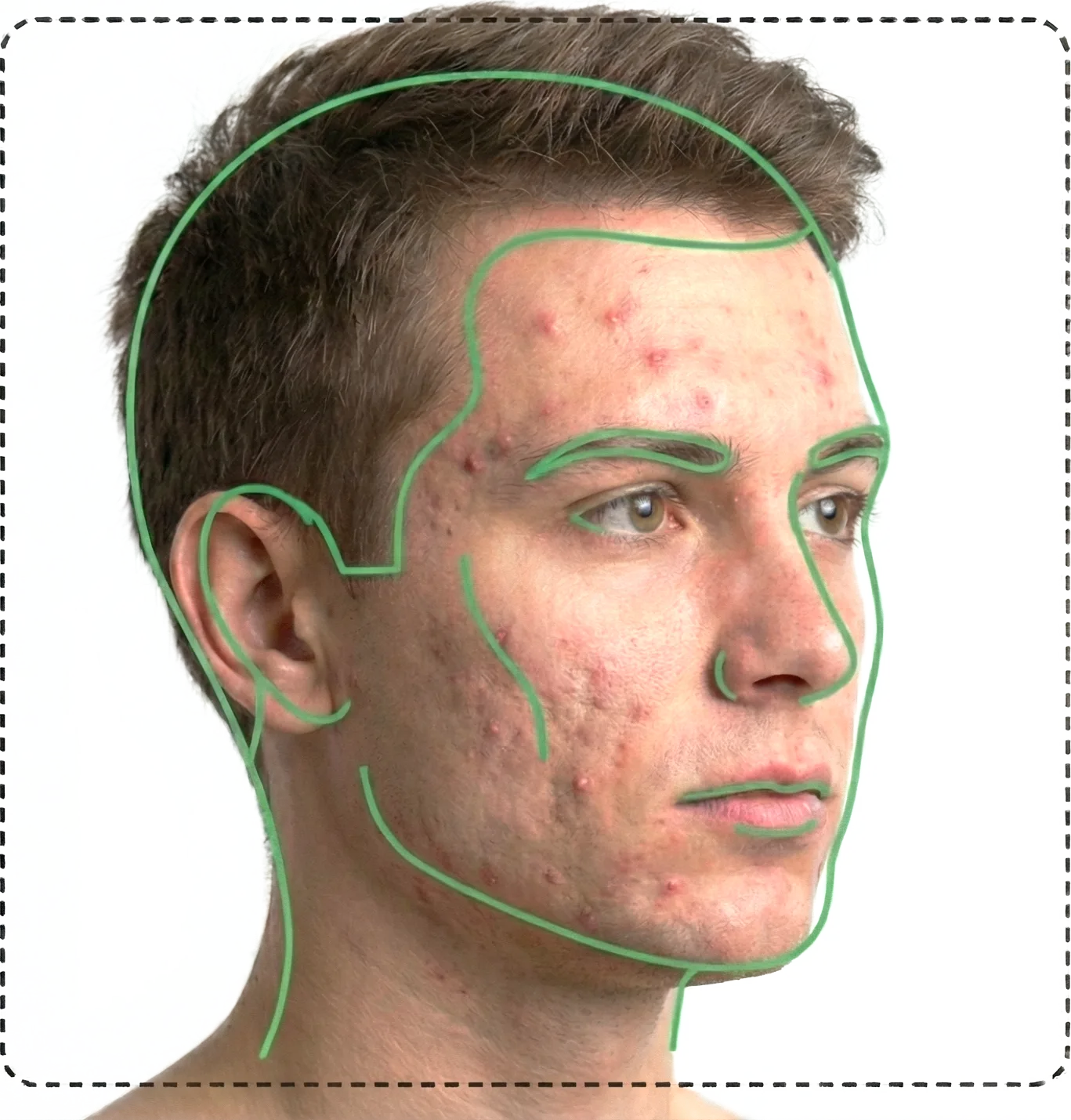
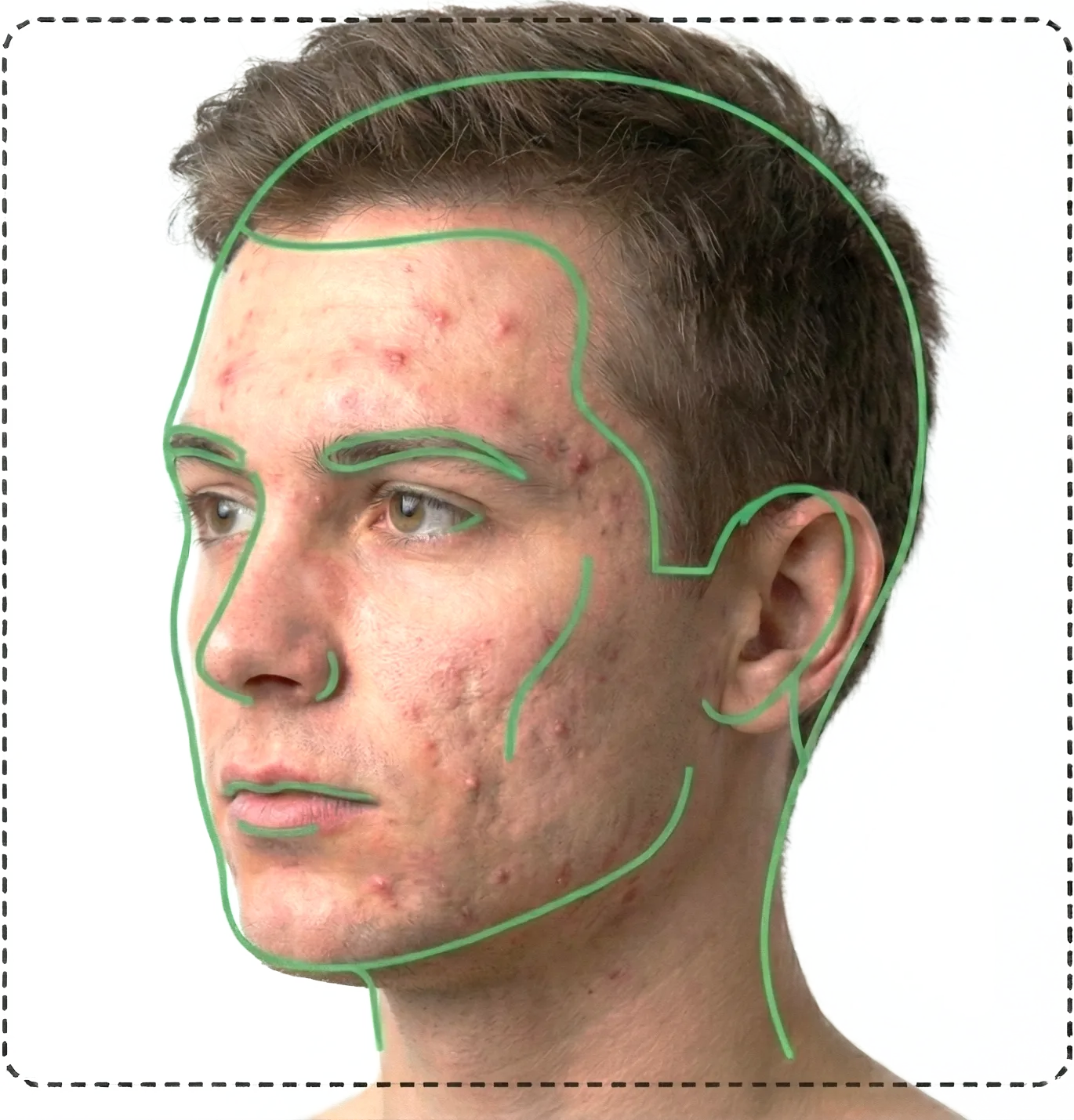
Then, we will use an AI algorithm to assess acne severity according to the Acne Lesion And Density INdex scoring system.
IGA
3
ModerateAcne Lesion And Density Index
3.5
ModerateScale 0 – 4 (continuous)
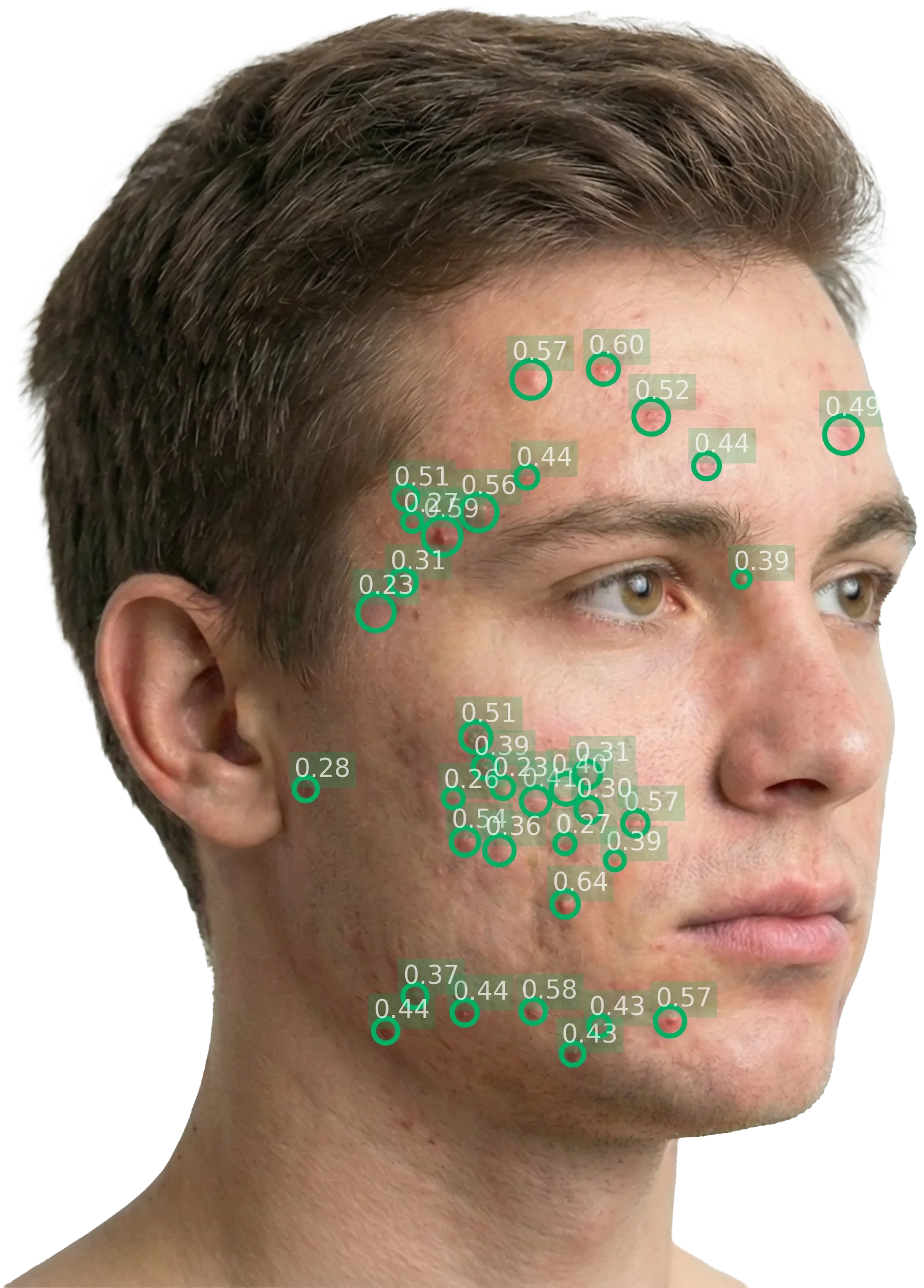
Body site
Left diagonal
Image quality
92%
Lesion count
36
Density
0.55
Local score
3.42
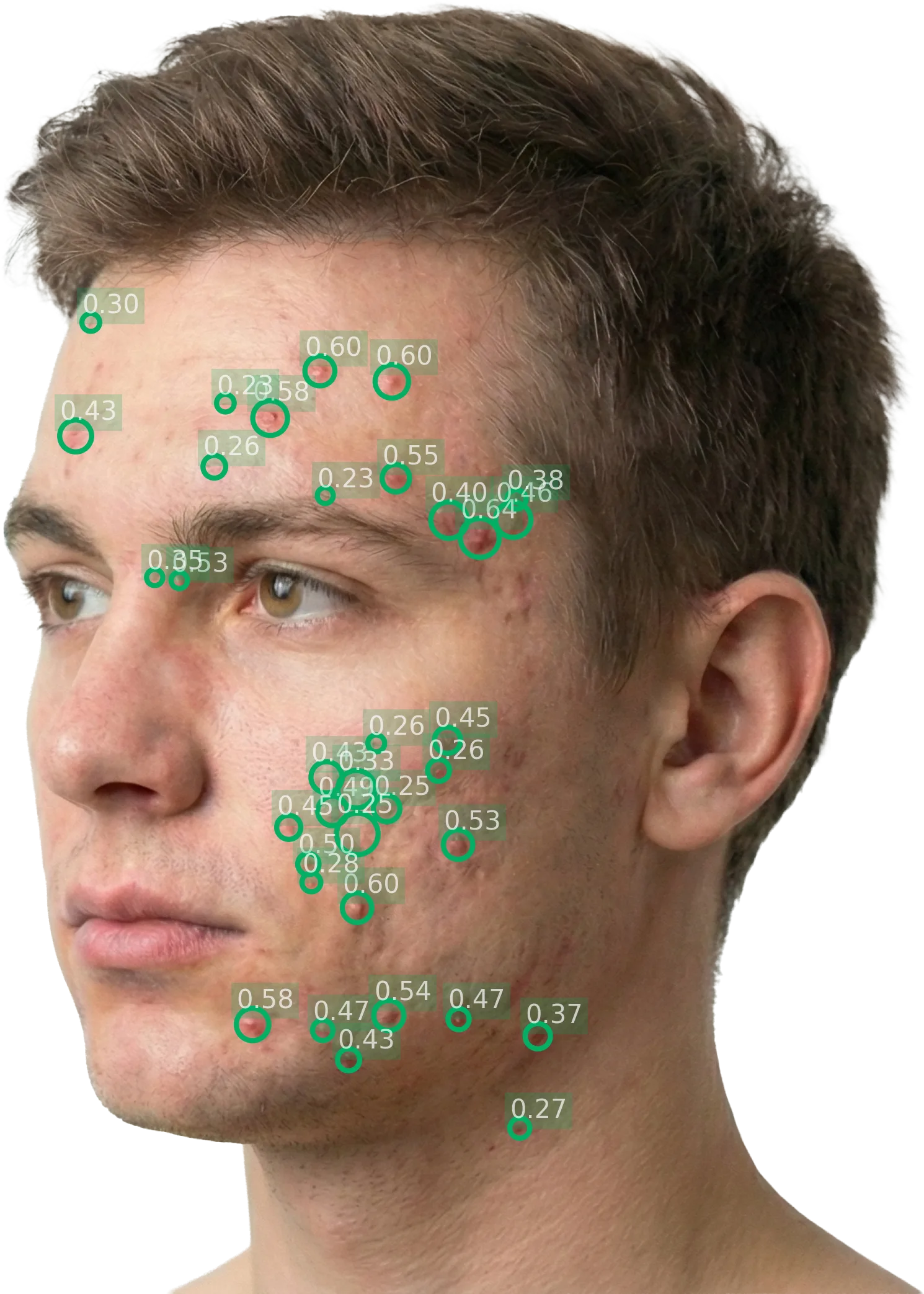
Body site
Right diagonal
Image quality
88%
Lesion count
35
Density
0.6
Local score
3.49
Acne Lesion And Density INdex
The Acne Lesion And Density INdex is an AI-driven scoring system that quantifies acne severity by analyzing two key visual cues from facial images:
- Lesion count (N): The total number of inflammatory acne lesions detected in the image.
- Lesion density (D): The spatial concentration of those lesions, measured as the ratio between overlapping detection areas and the total area covered by detected lesions.
These two components are combined into a simple, explainable formula:
The Acne Lesion And Density INdex score ranges from 0 to 4, aligned with the Investigator Global Assessment (IGA) scale:
| Score | Severity Label |
|---|---|
| 0 | Clear |
| 1 | Almost clear |
| 2 | Mild |
| 3 | Moderate |
| 4 | Severe |
How it works
The AI algorithm first detects inflammatory acne lesions from the uploaded image using a deep learning model. It then calculates the density by analyzing how closely the lesions are clustered together. Both values are combined using the Acne Lesion And Density INdex formula to produce a single severity score.
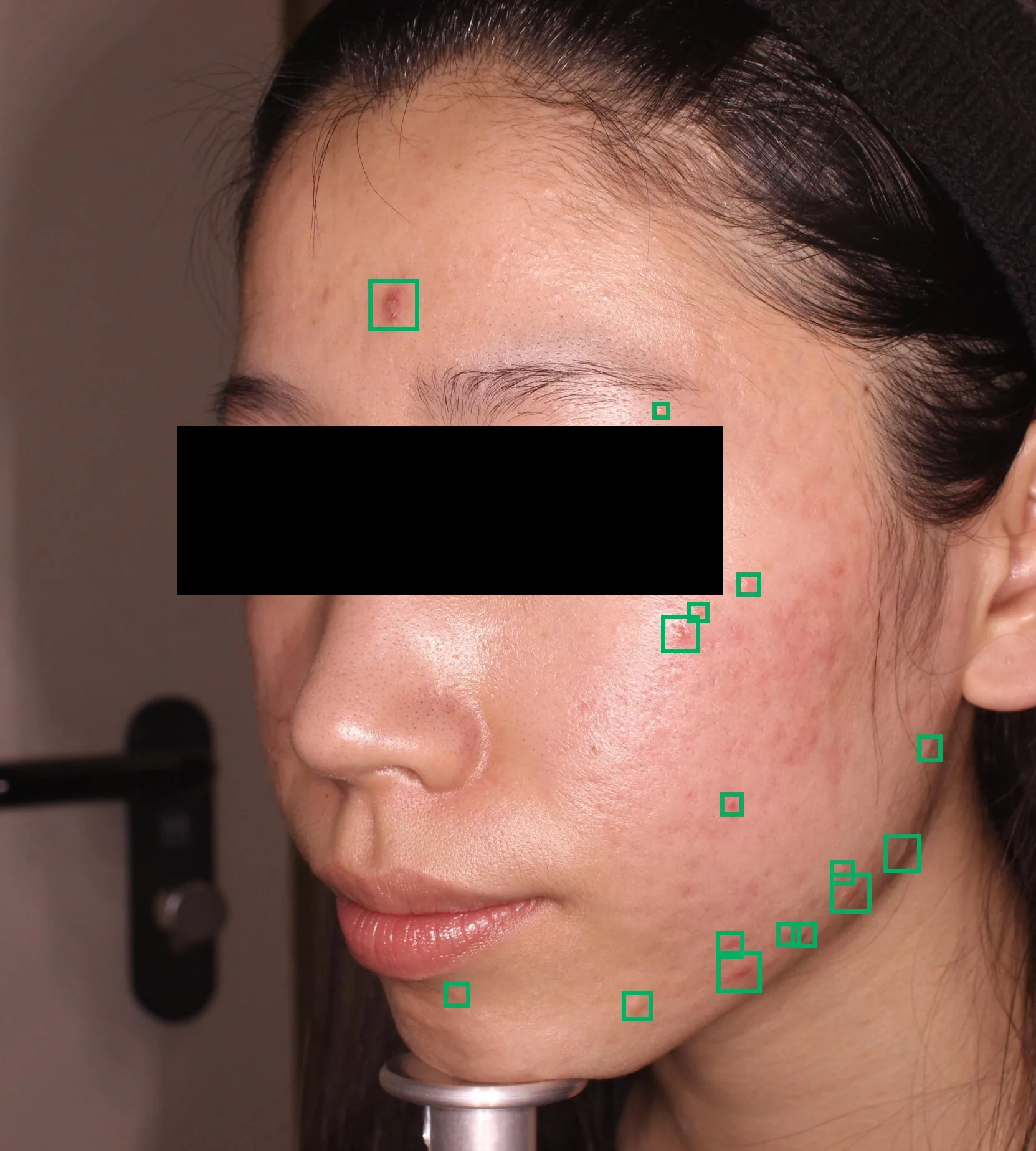
The density score captures not just the number of lesions but also their spatial distribution, which is a clinically relevant factor.